Lesson 2 だれの辞書ですか Whose dictionary is this?
Goals
- Point to things: これ・それ・あれ・どれ
- Describe things: この・その・あの・どの + noun
- Ask "what is this?" and "whose is this?"
- Count from 0 to 10
Dialogue
In the classroom, Dewi picks up something from the floor.
デウィゆきさん、これは 何ですか。
ゆきそれは 日本語の 辞書です。
デウィだれの 辞書ですか。
ゆきさあ… あ、名前が ありますね。「レオ・ウォーカー」。
デウィレオさんの 辞書ですね。じゃあ、あの かばんも レオさんのですか。
ゆきいいえ、あれは 森先生のです。
Translation
Dewi: Yuki, what is this?
Yuki: That's a Japanese dictionary.
Dewi: Whose dictionary is it?
Yuki: Hmm… oh, there's a name. "Leo Walker".
Dewi: So it's Leo's dictionary. Then is that bag over there Leo's too?
Yuki: No, that one is Mr. Mori's.
Vocabulary
| Word | Meaning |
|---|---|
| これ / それ / あれ / どれ | this one / that one / that one over there / which one |
| この / その / あの / どの ~ | this ~ / that ~ / that ~ over there / which ~ |
| 何 / 何 | what |
| 本 | book |
| 辞書 | dictionary |
| 雑誌 | magazine |
| 新聞 | newspaper |
| ノート | notebook |
| 鉛筆 | pencil |
| ボールペン | ballpoint pen |
| かばん | bag |
| 傘 | umbrella |
| 鍵 | key |
| 時計 | watch, clock |
| 財布 | wallet |
| 机 | desk |
| 椅子 | chair |
| テレビ / カメラ | TV / camera |
| 車 | car |
| スマホ | smartphone |
Grammar
1. これ・それ・あれ・どれ — this / that / that over there
Japanese has three distances (English has only two):
| Near me (the speaker) | Near you (the listener) | Far from both of us | Question | |
|---|---|---|---|---|
| Thing | これ this | それ that | あれ that (over there) | どれ which |
These words stand alone, like a noun:
- これは 本です。 — This is a book.
- それは 何ですか。 — What is that?
- あれは 私の 車です。 — That (over there) is my car.
- デウィさんの かばんは どれですか。 — Which one is your bag, Dewi?
The こ・そ・あ・ど system
Japanese uses こ (near me), そ (near you), あ (far) and ど (question) again and again. In Lesson 3 you'll meet ここ・そこ・あそこ・どこ (places) and こちら・そちら・あちら・どちら (directions).
2. この・その・あの・どの + noun
To say "this book" or "that bag", use この/その/あの/どの. They must be followed by a noun:
- この 本は 私のです。 — This book is mine.
- その 傘は 高いです。 — That umbrella is expensive.
- あの 人は だれですか。 — Who is that person over there?
- どの かばんですか。 — Which bag?
Common mistake
❌ これ本 → この本 (this book)
❌ この は 本です → これは 本です (this is a book)
3. 何ですか — "What is it?"
何 (what) is read なん before です, before counters, and before d-, t-, n- sounds. Otherwise it's なに:
- これは 何ですか。 — What is this?
- 何を 食べますか。 — What will you eat? (Lesson 6)
4. だれの ~ / ~の — whose
- これは だれの 傘ですか。 — Whose umbrella is this?
- 田中さんの 傘です。 — It's Ms. Tanaka's umbrella.
When the noun is clear, you can leave it out after の:
- この 傘は 田中さんのです。 — This umbrella is Ms. Tanaka's.
- あれは 私のです。 — That one is mine.
5. Sentence-ending ね and よ (preview)
- ね asks for agreement, like …, right? / …, isn't it?: レオさんの 辞書ですね。 — It's Leo's dictionary, right?
- よ gives new information, like …, you know: それは 私のですよ。 — That's mine, you know.
6. Numbers 0–10
| Number | Reading | Notes | |
|---|---|---|---|
| 0 | ゼロ / 零 | ゼロ, れい | |
| 1 | 一 | いち | |
| 2 | 二 | に | |
| 3 | 三 | さん | |
| 4 | 四 | よん / し | し sounds like 死 (death), so よん is preferred |
| 5 | 五 | ご | |
| 6 | 六 | ろく | |
| 7 | 七 | なな / しち | |
| 8 | 八 | はち | |
| 9 | 九 | きゅう / く | く sounds like 苦 (suffering) |
| 10 | 十 | じゅう |
Phone numbers are read digit by digit, with の for the dash: 090-1234-5678 → ゼロきゅうゼロのいちにさんよんのごろくななはち.
- 電話番号は 何番ですか。 — What's your phone number?
Kanji
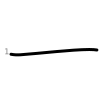
一
Meaning: one · Strokes: 1
On: イチ、イツ · Kun: ひと、ひと(つ)
Examples:
一 — one
一つ — one thing
一人 — one person
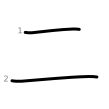
二
Meaning: two · Strokes: 2
On: ニ、ジ · Kun: ふた、ふた(つ)、ふたたび
Examples:
二 — two
二つ — two things
二人 — two people
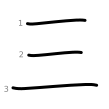
三
Meaning: three · Strokes: 3
On: サン、ゾウ · Kun: み、み(つ)、みっ(つ)
Examples:
三 — three
三つ — three things
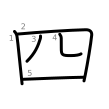
四
Meaning: four · Strokes: 5
On: シ · Kun: よ、よ(つ)、よっ(つ)、よん
Examples:
四 — four
四つ — four things
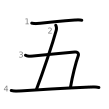
五
Meaning: five · Strokes: 4
On: ゴ · Kun: いつ、いつ(つ)
Examples:
五 — five
五つ — five things
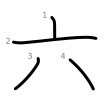
六
Meaning: six · Strokes: 4
On: ロク、リク · Kun: む、む(つ)、むっ(つ)、むい
Examples:
六 — six
六つ — six things
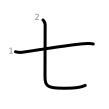
七
Meaning: seven · Strokes: 2
On: シチ · Kun: なな、なな(つ)、なの
Examples:
七 — seven
七つ — seven things
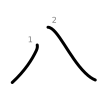
八
Meaning: eight · Strokes: 2
On: ハチ · Kun: や、や(つ)、やっ(つ)、よう
Examples:
八 — eight
八つ — eight things
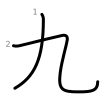
九
Meaning: nine · Strokes: 2
On: キュウ、ク · Kun: ここの、ここの(つ)
Examples:
九 — nine
九つ — nine things
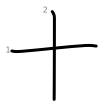
十
Meaning: ten · Strokes: 2
On: ジュウ、ジッ、ジュッ · Kun: とお、と
Examples:
十 — ten
十日 — 10th day
Culture note: lucky and unlucky numbers
4 (し) sounds like 死 death, and 9 (く) sounds like 苦 suffering. Many hospitals and hotels in Japan skip room number 4 or 9, and gifts are never given in sets of four. 8 (八) is lucky, because the shape spreads out wider at the bottom, like a future that opens up.
Exercises
1. これ・それ・あれ or この・その・あの?
- ( )は 私の 本です。 (near me)
- ( )人は 先生です。 (far away)
- ( )かばんは だれのですか。 (near you)
- 田中さんの 傘は ( )ですか。 (which?)
2. Answer the questions.
- これは 何ですか。 (a dictionary)
- それは だれの 時計ですか。 (Leo's)
- あの 車は 先生のですか。 (No → Yuki's)
3. Read the numbers out loud, then write them in hiragana.
- 4 2. 7 3. 9 4. 03-5678-1234
4. Read the kanji. 1. 三 2. 八 3. 五 4. 十 5. 一 6. 六
Answers
1. 1. これ 2. あの 3. その 4. どれ
2. 1. (それは)辞書です。 2. レオさんの 時計です。 3. いいえ、ゆきさんのです。
3. 1. よん 2. なな 3. きゅう 4. ゼロさんの ごろくななはちの いちにさんよん
4. 1. さん 2. はち 3. ご 4. じゅう 5. いち 6. ろく